- María del Campo
- 05 Oct 2011 - 00:00
- 0 Comentarios
- Visto 20.157 veces
La capital de España es el mayor plató al aire libre de España. La mayoría de películas y series del cine español se ruedan o han rodado por sus calles. Si quieres hacer una pausa en tus estudios en alguna de las academias de ingles en Madrid y tienes curiosidad por saber dónde se rodó tu peli favorita, no te pierdas este especial:
Abre los ojos:
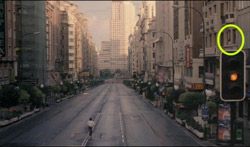
La película de 1997 de Alejandro Amenábar utiliza varias localizaciones en exteriores, como los alrededores de la iglesia de los Jerónimos y especialmente la Gran Vía, donde un asustado Eduardo Noriega comprueba que en plena hora punta está… desierta. Para la filmación de una escena tan irreal entre las plazas de Callao y Plaza de España, se necesitaron cientos de ayudantes que cortaron el tráfico en todas las calles aledañas a primera hora de la mañana. La escena tuvo que repetirse decenas de veces porque nadie podía impedir que los espontáneos se asomaran a los balcones, resultando al final una de las secuencias más impactantes del cine español. La película finaliza en la azotea de la torre Picasso, en la plaza de Pablo Ruiz Picasso, s/n.

- inglés
- Madrid
- Presencial
Chuecatown:
Leo (Pepón Nieto) y Rei (Carlos Fuentes) son una pareja de osos gay que se ve envuelta en una trama de asesinatos de ancianas por el barrio de Chueca en la película de 2006 del director Juan Flahn. El asesino es Victor (Pablo Puyol), un tipo sin escrúpulos que trabaja en una inmobiliaria y que quiere hacer del barrio un oasis de luz y diseño. El apartamento en el que vive la pareja y al que se traslada su deslenguada madre (Concha Velasco) se encuentra en la calle Pelayo 30, teniendo varias localizaciones en exteriores como la misma plaza de Chueca con su centenaria taberna Angel Sierra, y varios interiores como la discoteca bear The Angel en la calle Pelayo y la escalinata de mármol del hall del Círculo de Bellas Artes en la calle Alcalá 42.
Días de fútbol:
Si hay un protagonista además de los propios actores, es el barrio de la Elipa, al que incluso Ramón (Roberto Alamo) dedica un «¡que viva la Elipa!» en la boda entre el ex-convicto Antonio (Ernesto Alterio) y Macarena (Lola Dueñas). Este popular barrio del este de la capital es el escenario donde se desenvuelve la película de 2003 de David Serrano. La mayoría de sus edificios se deben a las construcciones de protección oficial de la década de 1960 y 1970, con muchos espacios abiertos por donde trasncurren las andanzas de los personajes. Destaca el campo de fútbol, actualmente de césped artificial, donde jugaba el «Brasil» y desde donde se divisa el cercano pirulí de Torrespaña; y su principal pulmón verde, el pinar formado por el parque de la Elipa, colindante con la M-30, donde Antonio y Macarena hablan por primera vez de su boda. En una de las escenas también se observa un graffiti con una de las viejas reivindicaciones del barrio: su famoso eslógan «Metro Ya» que durante décadas demandó la llegada del suburbano. Afortunadamente, en 2007 se cumplió ésta aspiración con la prolongación de la línea 2, que abría estación en la Avenida Marqués de Corbera.
El Bola:
El director Achero Mañas narra con gran agilidad este drama urbano del año 2000. Pablo «El Bola» (Juan José Ballesta) es un tímido chaval del barrio de Carabanchel, que sufre en silencio el maltrato de su padre, Mariano (Manuel Morón). Las cosas, afortunadamente, las cambia la llegada de su nuevo compañero de clase, Alfredo (Pablo Galán), que con la ayuda de su padre, Jose (Alberto Jiménez), consiguen devolver la ilusión al chico. Las localizaciones exteriores de la película son abundantes y transcurren generalmente por las calles del barrio, donde llegan a visualizarse el acceso a la estación de Metro de Urgel y los puentes de Segovia y de San Isidro sobre el río Manzanares. El Bola y Alfredo pasan un día en el Parque de Atracciones de la Casa de Campo, donde los chavales se lo pasan en grande en La Lanzadera y El Tornado. La familia de Alfredo también disfruta de un día pasado por agua en La Pedriza de Manzanares el Real, donde la silueta de su pico más famoso, el Yelmo, sirve de escenario para su día de campo.

- francés
- Madrid
- Presencial
El Crack 2:
Germán Areta (Alfredo Landa) es un ex-policía metido a detective privado, en cuyas manos cae un rutinario caso de celos entre una pareja homosexual. Este es el argumento inicial de la película de Jose Luis Garci de 1983, donde muy al gusto del director, la escena se salpica con postales de la ciudad sin relación con la secuencia. Así por ejemplo, la agencia «Areta Investigación» propiedad de Germán parece encontrarse en el actual edificio de los Juzgados de lo Mercantil, en Gran Vía, 52, donde la cámara enfoca al dirigirse el protagonista a su trabajo. La Gran Vía, recorrida por los desaparecidos microbuses amarillos, parece el centro de la cinta. Allí se encuentran Areta y su antiguo jefe el Abuelo (José Bódalo) en una cafetería com amplios ventanales sobre la calle; allí es también donde se aloja el espiado Alfonso Leiva en el hotel Emperador; y ya en el aparcamiento subterráneo de plaza de España, donde comienza la trama al intentar quemar Areta su propio coche con un bidón de… agua. Otras localizaciones memorables son el templo de Debod, donde se reúnen Areta y su ayudante Cárdenas el Moro (Miguel Rellán), el lago de la Casa de Campo o la fachada del Ministerio de Educación -en Alcalá, 34- que parece ser la sede de la oficina del malísimo Frutos (Arturo Fernández).
El día de la bestia:
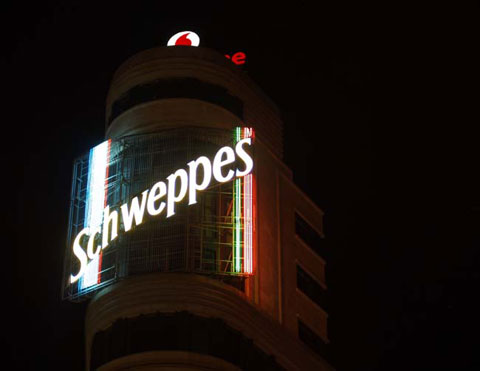
El padre Angel Berriartúa (Alex Angulo) descubre que a través de un mensaje oculto en el Apocalipsis, el anticristo va a nacer el día de Nochebuena de 1995 en Madrid. Así comienza esta cinta del director Alex de la Iglesia, en la que las calles de la capital son escenario de toda clase de desastres, como el asesinato del dependiente de una tienda 24 horas, ubicada en la esquina de Príncipe de Vergara con Maldonado, o la persecución a tiros por una atestada calle Preciados en plena hora punta navideña y el vestíbulo de la FNAC en la misma calle. La escena principal es la de los tres protagonistas: el cura, el aficionado al death metal José Mari (Santiago Segura) y el presentador de televisión y astrólogo profesor Cavan (Armando de Razza), que acaban colgando del famoso rótulo de neón de Schweppes en lo alto del edificio de la esquina de Gran Vía con la plaza de Callao. El final de la cinta se produce en la plaza de Castilla, donde se reúnen sobre la salida del túnel hacia el paseo de la Castellana, girando la cámara hasta visualizar -tras la estatua de Calvo Sotelo– las torres inclinadas de KIO, símbolo del anticristo según el profesor, que en aquéllos momentos se encontraban en la fase final de su construcción.
Historias del Kronen:
Aunque la película de Montxo Armendáriz de 1995 ofrece numerosos exteriores de Madrid, las localizaciones son difíciles de reconocer, salvo los dos escenarios donde Carlos (Juan Diego Botto) y Roberto (Jordi Mollá) deambulan a lo loco por las calles. Es el caso por ejemplo de los túneles de AZCA, donde circulan en dirección contraria con su coche, o el paso elevado de Juan Bravo sobre la Castellana, desde el que se cuelgan Pedro (Aitor Merino) y un joven con el que ha discutido en el bar (Eduardo Noriega).
La Cabina:
Cuentan las malas lenguas que el efecto pánico a las cabinas telefónicas causado por el estreno del cortometraje de Antonio Mercero en 1972 fue el causante de su paulatina sustitución por cabinas abiertas a lo largo de las últimas décadas. Aunque la mayor parte de la trama trascurre en una ajardinada plaza del entorno del complejo AZCA de Nuevos Ministerios, el cada vez más asustado Jose Luis López Vázquez realiza a su pesar un largo paseo por algunas de las nuevas infraestructuras viarias del Madrid de la época, como los scalextric de Joaquín Costa y Atocha (actualmente desaparecido) y el túnel de María de Molina.
La Comunidad:
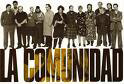
En la película de 2000 de Alex de la Iglesia, Julia (Carmen Maura) encuentra un botín bajo una baldosa en la casa de un vecino fallecido. Para evitar las iras de los vecinos, debe correr toda clase de peligros que le llevarán a la azotea del edificio, donde es perseguida por sus iracundos inquilinos. Si se alza la vista hacia las cuadrigas que adornan la terraza del edificio junto al Ministerio de Educación -en la calle Alcalá, 34- todavía podemos imaginarnos a Julia entre las patas de los caballos, de las que finalmente quedaría suspendida en el vacío.<
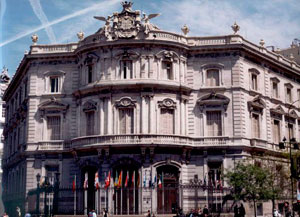
Casa de América en la plaza de Cibeles
La escopeta nacional:
En la película de Luis García Berlanga de 1978, una familia de aristócratas regresa de su residencia del campo en plena transicion española. Un atribulado duque (Luis Escobar) se instala en su palacio madrileño, que no es otro que la actual Casa de América, en plena plaza de Cibeles, en la esquina de Alcalá con el paseo de Recoletos.
Las chicas de la Cruz Roja:
Paloma (Conchita Velasco), Julia (Luz Márquez), Isabel (Mabel Karr) y Marion (Katia Loritz) son cuatro postulantes de la Cruz Roja que recorren Madrid con sus huchas en el «día de la banderita». La película de 1958 de Rafael J. Salvia es una cinta turística por el Madrid de la posguerra, donde los exteriores son la parte más brillante de la comedia: desde una Gran Vía y Cibeles empedradas, surcadas por trolebuses y autobuses de dos pisos, hasta un moderno Paseo de la Castellana, con el Estadio de Chamartín (futuro Santiago Bernabéu) inaugurado apenas 10 años antes. No faltan tampoco filmaciones frente al Palacio de Oriente (futuro Palacio Real) y junto al estanque del Retiro, donde Isabel y Julia coquetean con sus nuevos pretendientes. Las chicas también recorren dos de los centros del poder financiero madrileño: la Bolsa –en la plaza de la Lealtad- y el hipódromo de la Zarzuela.

- alemán
- Madrid
- Presencial
Los abrazos rotos:
Lena (Penélope Cruz) es una secretaria con aspiraciones de actriz que vive una doble historia de amor entre su jefe, el magnate Ernesto Martel (Jose Luis Gómez) y el director de cine Mateo Blanco (Lluis Omar). Este es el argumento de la película de 2009 de Pedro Almodóvar, que transcurre entre Madrid y Lanzarote. Es en el distrito financiero de la capital, concretamente en la plaza de Picasso, donde se encuentra la sede de Ermal, la figurada empresa constructora dirigida por Ernesto Martel; siendo en otro barrio muy distinto, el de los Austrias, donde reside Mateo/Harry. Las empinadas calles del entorno del viaducto son el escenario de las entradas y salidas de su casa, así como de las conversaciones entre Mateo y Diego (Tamar Navas). Otra localización memorable es el interior del café Museo Chicote -en Gran Vía, 51- donde no es difícil encontrar al mismísimo director cualquier fin de semana. Allí es donde Judith (Blanca Portillo) confiesa su secreto guardado durante largos años a Mateo y a su hijo Diego, y desde donde lleva en su coche a Mateo hasta su casa, dejándole en la calle de la Morería frente al restaurante Plato & Placer y el café Viaducto, cuyas fachadas son visibles en la cinta.
Mujeres al borde de un ataque de nervios:
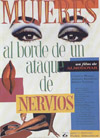
En la película de 1988 de Pedro Almodóvar, Pepa (Carmen Maura), una actriz de doblaje en plena ruptura conyugal, complica su vida tras la llegada de su amiga Candela (María Barranco), que huye de la policía. Además de alguna secuencia fugaz en la que se divisa el famoso pirulí de televisión al final de la calle O’Donnell, o las idas y venidas por la calle Almagro, entre las disparatadas secuencias, Pepa sube a un mambotaxi conducido por un peculiar personaje (Guillermo Montesinos) persiguiendo a Lucía (Julieta Serrano), que previamente había secuestrado a un motociclista. La persecución tiene como marco los túneles del complejo AZCA de Nuevos Ministerios. La primera imagen del Madrid almodovariano se encuentra en Pepi, Luci, Bom y otras chicas del montón de 1980, donde aparece AZCA como escenario de la agencia de publicidad donde trabaja la adicta a la marihuana Pepa (Carmen Maura), o una de las pasarelas sobre la carretera de Andalucía, donde Pepa y Bom (Alaska) hablan del Parque de Lisboa como el lugar ideal para vivir. Allí es donde vive Luci (Eva Siva), esposa fugada de casa y adicta al sado, reconvertida en grupi del grupo punk de Bom. En Hable con Ella de 2002, aparece un edificio abandonado en el que el director situó su academia de baile, que en la actualidad es la sede del hotel que lleva el nombre de la protagonista (Alicia). También aparece el Cine Doré de Santa Isabel y la calle Almagro.
Sangre de Mayo:
La película de José Luis Garci de 2008 es una ocasión perdida para tratar desde el punto de vista histórico los sucesos del 2 de mayo de 1808 (ver apoyo superior). La historia de amor entre Inés (Paula Echevarría) y Gabriel (Quim Gutiérrez) tiene rodados la mayoría de exteriores en estudios, aunque se ambientan en escenarios reales de la capital como el Arco de Cuchilleros visto desde la Cava de San Miguel y la antigua estatua de la Mariblanca en la Puerta del Sol, monumento actualmente desaparecido, del que existe una pequeña reproducción en el centro de la plaza. La película utiliza otros escenarios de los alrededores como el Monasterio del Escorial, donde la nobleza de la época utilizaba las praderas aledañas para almorzar a la sombra de las encinas. Como fondo de varias escenas escurialenses aparece un templete que en realidad se encuentra en el parque del Capricho de la capital.
Taxi:
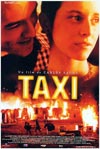
Un grupo de taxistas, autodenominado «la familia”, se dedica a limpiar la ciudad de negros, toxicómanos y homosexuales. Este es el argumento de la película de 1996 del director Carlos Saura, que ofrece un extenso recorrido por las calles de Madrid. Desde el primer fotograma, que comienza en la fachada del edificio Metrópolis de la esquina de Gran Vía con Alcalá, la cinta narra una turbulenta historia de amor entre los hijos de dos miembros de «la familia», Paz (Ingrid Rubio) y Dani (Carlos Fuentes), atrapado este último entre la lealtad al grupo y su amor por Paz. No es vano, el padre de Dani se encuentra ingresado en el Hospital de El Escorial, víctima de un apuñalamiento tras un robo. El grupo utiliza sus propios taxis para secuestrar y asesinar a sus pasajeros, como el transexual que recoge Velasco, el padre de Paz (Angel de Andrés López) en el puente de Vallecas y es asesinado sobre el puente de O’Donnell con el pirulí de Torrespaña y el pinar de la Elipa de fondo; o la toxicómana recogida por Reme (Agata Lys), que es arrojada por el viaducto de Bailén sobre la calle Segovia. Apenas un par de años después de esta película, el Ayuntamiento instaló barreras antisuicidio en este famoso puente para evitar imitadores. Mientras tanto, Paz, que es ajena a los turbios asuntos de «la familia», se besa por primera vez con Dani en los jardines del Palacio de Cristal del parque del Retiro, obligándole como prueba de amor a bañarse en las láminas de agua de la plaza de Colón, actualmente inoperativas, finalizando la historia nuevamente en el Retiro, donde Paz es perseguida hasta el monumento a Alfonso XII por Calero (Eusebio Lázaro), quien quiere matarla.
Tesis:
Un joven Alejandro Amenábar utiliza su propia Facultad de Ciencias de la Comunicación de la Universidad Complutense, donde cursaba estudios, para debutar como director en 1996. Allí, un curioso alumno (Fele Martínez) destapa un escabroso caso de snuff movies filmadas por un profesor y un compañero suyo (Eduardo Noriega).
Torrente 3:
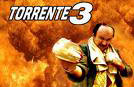
El poco eficiente agente Torrente, encarnado por el actor y director Santiago Segura, utiliza varias localizaciones de Madrid en su tercera entrega de la saga, en el año 2005. Quizás la más espectacular es al principio de la película, cuando el protagonista salta en paracaídas de un avión, momentos antes de impactar contra las torres inclinadas de KIO en la plaza de Castilla, en una alusión muy poco afortunada a los sucesos del 11S de Nueva York.
Tres de la Cruz Roja:
Tres amigos aficionados al fútbol descubren que con uniforme de la Cruz Roja se abren las puertas de los campos de futbol… así comienza este clásico del cine español, dirigido por Fernando Palacios en 1961. Los tres amigos son Pepe (Tony Leblanc), Jacinto (José Luis López Vázquez) y Manolo (Manolo Gómez Bur), cuya vida cambia drásticamente tras su ingreso en la institución. Su mayor deseo es ver de cerca al Real Madrid de Puskas en el estadio Santiago Bernabéu del Paseo de la Castellana. La cinta recoge otros escenarios deportivos como la llegada de la Vuelta Ciclista al Paseo de Coches del Retiro, donde Pepe intenta fotografiarse infructuosamente delante de la estatua de Ramón y Cajal; o las carreras de caballos del Hipódromo de la Zarzuela en la avenida Padre Huidobro. Otros exteriores recogidos son el cruce del paseo de la Castellana con la calle de María de Molina, donde todavía se alza la estatua ecuestre del Marqués del Duero que se vislumbra en la película; y la esquina de Gran Vía con Alcalá, donde Jacinto comprueba su fallida suerte en un quiosco de Loterías.
V:
¡Lo que le faltaba a Madrid es una invasión alienígena en toda regla! Ni más ni menos que sobre el cartel publicitario de Tío Pepe en La Puerta del Sol es donde se posa la enorme nave extraterrestre que tanto arrasó en audiencia en los años 80 y que en el remake de 2010 no acaba de cuajar del todo. Una malvadísima Anna se dirige a los madrileños para ofrecerles las bondades de visitar su nave, ¡la muy descarada!.
Academias de idiomas en Madrid
 12 curiosidades del español que no conocías
  ¿Qué es el esperanto? La lengua planificada más hablada del mundo
  Cómo pedir una cerveza en varios idiomas: 33
  Errores de traducción que hicieron, literalmente, historia